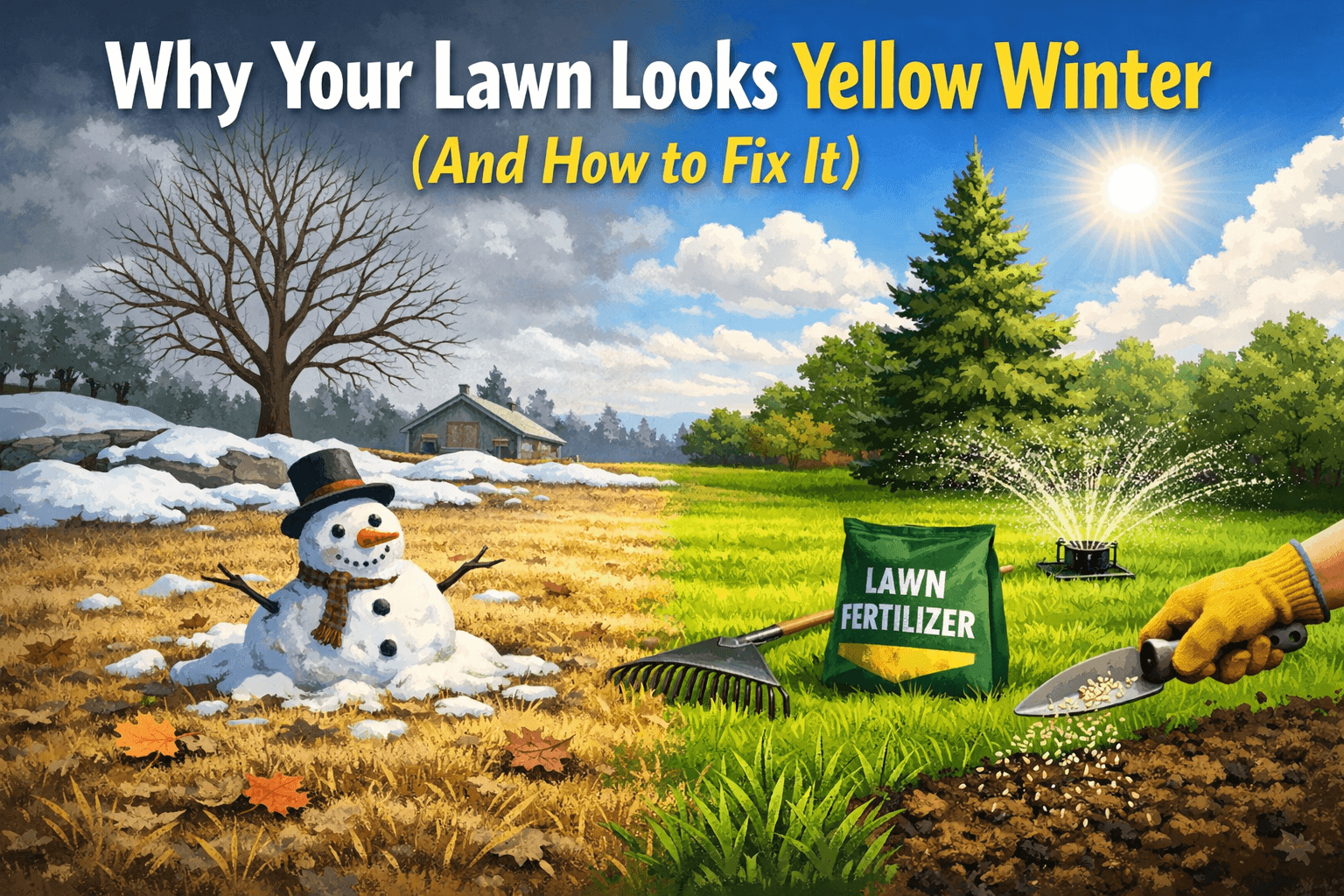
You have been waiting all winter for this moment. The snow has finally melted across Edmonton, the days are getting longer, and you step outside expecting to see your lawn waking up — only to find a dull, patchy, yellow mess staring back at you.
If your lawn looks yellow after winter, you are definitely not alone. It is one of the most common concerns we hear from Edmonton homeowners every spring at Seasons 360. The good news is that a yellow lawn after winter does not automatically mean your grass is dead or beyond saving. In most cases, there are very specific, fixable reasons behind it.
In this guide, we will walk you through the most common causes of yellow lawns after Edmonton’s harsh winters — and more importantly, exactly what to do about each one.
Is Your Yellow Lawn Actually Dead — Or Just Dormant?
Before jumping into solutions, it helps to understand one key distinction: yellow grass is not always dead grass. In fact, most of the time, it is simply dormant.
Dormancy is a natural survival mechanism. When temperatures drop, grass stops growing and pulls its energy inward to protect the root system. The blades turn yellow or straw-coloured, but the roots below are still alive and waiting for conditions to improve.
A simple tug test can tell you which situation you are dealing with. Grab a handful of yellow grass and gently pull. If it comes out easily with no resistance and the roots look dark or mushy, the grass in that patch is likely dead. If it holds firm and the roots look light-coloured and intact, the grass is alive and just needs the right care to green up.
Cause #1: Snow Mold
Snow mold is one of the most common culprits behind yellow and matted lawns in Edmonton every spring. It is a fungal disease that develops underneath the snow during winter — specifically in areas where snow sat for extended periods on unfrozen ground.
There are two types: grey snow mold and pink snow mold. Grey snow mold only affects the grass blades and tends to resolve on its own with some raking and airflow. Pink snow mold is more aggressive and can damage the crown and roots of the grass, requiring more intervention to recover from.
How to Fix It:
Start with a thorough spring cleanup to remove all the matted, affected grass. Power raking is especially effective here because it breaks up the matted layer and exposes the soil to sunlight and fresh air — both of which help eliminate the fungal conditions. Once cleaned up, overseed any bare patches and apply a balanced fertilizer to encourage recovery.
Cause #2: Nitrogen Deficiency
Nitrogen is the nutrient most responsible for giving grass its deep green colour. It fuels the production of chlorophyll — the pigment that makes plants green. When your lawn is low on nitrogen, the first thing you notice is that the grass turns pale, yellow, or lime-coloured, often unevenly across the lawn.
Edmonton’s long winter depletes nitrogen levels in the soil significantly. Snowmelt and spring rain also wash nitrogen out of the ground before your grass even has a chance to absorb it. The result is a lawn that is literally starving for nutrients just as it is trying to wake up and grow.
How to Fix It:
A properly timed spring fertilization is the most direct solution. For Edmonton lawns, a slow-release nitrogen fertilizer applied after the soil has thawed — typically from late April onward — gives the grass a steady supply of nutrients as it comes out of dormancy. Applying too early on frozen or waterlogged ground is a waste, as the fertilizer simply runs off before the roots can absorb it.
At Seasons 360, our fertilization service uses the right product blend and application timing for Edmonton’s specific climate — so every treatment actually delivers results.
Cause #3: Salt and De-Icer Damage
If your lawn borders a driveway, sidewalk, or road, there is a good chance that road salt or de-icing chemicals have been splashing or running off onto the grass all winter. Salt damage causes what is known as chemical burn — and it shows up in spring as yellow, brown, or completely dead strips of grass along the edges of hard surfaces.
Salt works by drawing moisture out of the soil and the grass blades themselves. It also disrupts the balance of nutrients in the soil, making it harder for grass to absorb water and minerals even after the salt itself has been diluted by rain or irrigation.
How to Fix It:
The first step is to flush the affected areas with plenty of water in early spring to dilute and drain the salt deposits from the soil. A thorough spring cleanup to remove debris and dead material follows. In heavily affected spots, adding gypsum to the soil can help neutralize salt damage and restore the soil’s ability to hold nutrients. Overseeding those edges in late spring completes the recovery.
Cause #4: Soil Compaction Blocking Nutrient Absorption
A lawn can look yellow even when you are watering and fertilizing it regularly — and the reason is often compaction. Edmonton’s clay-heavy soil becomes extremely dense after winter, creating a hard barrier between the surface and the root zone. Nutrients and water sit on top of the ground without ever reaching where they are needed.
Compaction also reduces oxygen in the soil, which directly slows root development and weakens the overall health of the turf. A lawn growing in compacted soil is essentially working twice as hard for half the results — and the yellowing is the visible symptom of that struggle.
How to Fix It:
Deep core aeration is the most effective treatment for compacted soil. The process pulls out plugs of soil across the entire lawn, opening up channels that allow air, water, and fertilizer to penetrate directly to the root zone. When aeration is paired with fertilization in the same spring service, the nutrients reach the roots far more efficiently — which means faster greening and stronger growth throughout the season.
Cause #5: Thatch Buildup Suffocating the Grass
Thatch — the dense layer of dead grass, roots, and organic material that sits just above the soil — can be another hidden cause of yellow lawns. When thatch builds up beyond half an inch, it traps moisture at the surface and creates humid conditions that promote disease, while simultaneously preventing sunlight and fresh air from reaching the living grass below.
After Edmonton’s winter, thatch problems are especially common because the cold slows the natural decomposition process. The result is a thick, matted layer that the lawn has to push through just to survive — often resulting in thin, pale, yellow grass by the time spring arrives.
How to Fix It:
Power raking removes the thatch layer quickly and thoroughly. Once the blockage is cleared, sunlight reaches the soil, airflow improves, and your grass has the room it needs to push up new growth. Most lawns show a noticeable improvement in colour and density within one to two weeks of a professional power rake treatment.
The Complete Fix: What Your Yellow Lawn Actually Needs
In most cases, a yellow Edmonton lawn is not suffering from just one problem — it is dealing with a combination of several of the causes above. That is why the most effective approach is a full spring cleanup that tackles everything together, in the right order.
Here is what that process looks like when done right:
- Spring cleanup — remove all debris, dead material, and salt deposits
- Power raking — strip away thatch so the lawn can breathe
- Deep core aeration — break up compacted soil for better absorption
- Fertilization — replenish nitrogen and other depleted nutrients
- Weed control — prevent weeds from taking advantage of stressed turf
- Overseeding — fill in any patches where grass did not recover
Each step builds on the one before it. Skip any of them and the results are noticeably weaker. Done together by an experienced team that understands Edmonton’s soil and climate, this process transforms a yellow, stressed lawn into a thick, green, healthy one in a matter of weeks.
Get Your Edmonton Lawn Green Again with Seasons 360
A yellow lawn after winter is a signal — and the sooner you respond to it, the easier and faster the recovery. Waiting too long allows the underlying problems to worsen, weeds to establish, and the window for effective spring treatment to close.
At Seasons 360, we have spent years helping Edmonton homeowners and commercial property managers diagnose and fix exactly these kinds of lawn problems. We know this city’s climate, its soil, and the specific challenges that come with every spring thaw. Our team handles everything from the initial cleanup through to fertilization and weed control — so you get a full recovery, not just a temporary fix.
Contact Seasons 360 today for a free quote and let us turn that yellow lawn into the green, healthy yard your property deserves.