Every spring in Edmonton, lawn care conversations quickly turn to the same handful of treatments — aeration, fertilization, weed control. But one service that often gets less attention than it deserves, despite having one of the most immediate and visible impacts on lawn health, is power raking.
Power raking is not a glamorous treatment. It does not make your lawn instantly green or eliminate weeds overnight. What it does is remove the physical barrier that is quietly suffocating your lawn every single year — the dense, compacted layer of dead grass and organic debris that builds up over winter and prevents everything else you do from working properly.
If you have ever fertilized your Edmonton lawn and wondered why the results were underwhelming, or why certain sections stay brown and matted well into spring while the rest of the yard greens up, the answer is very often thatch — and power raking is the solution. This guide explains everything you need to know about power raking in Edmonton, why it matters more here than in most other cities, and what to expect from a professional service.
What Is Power Raking?
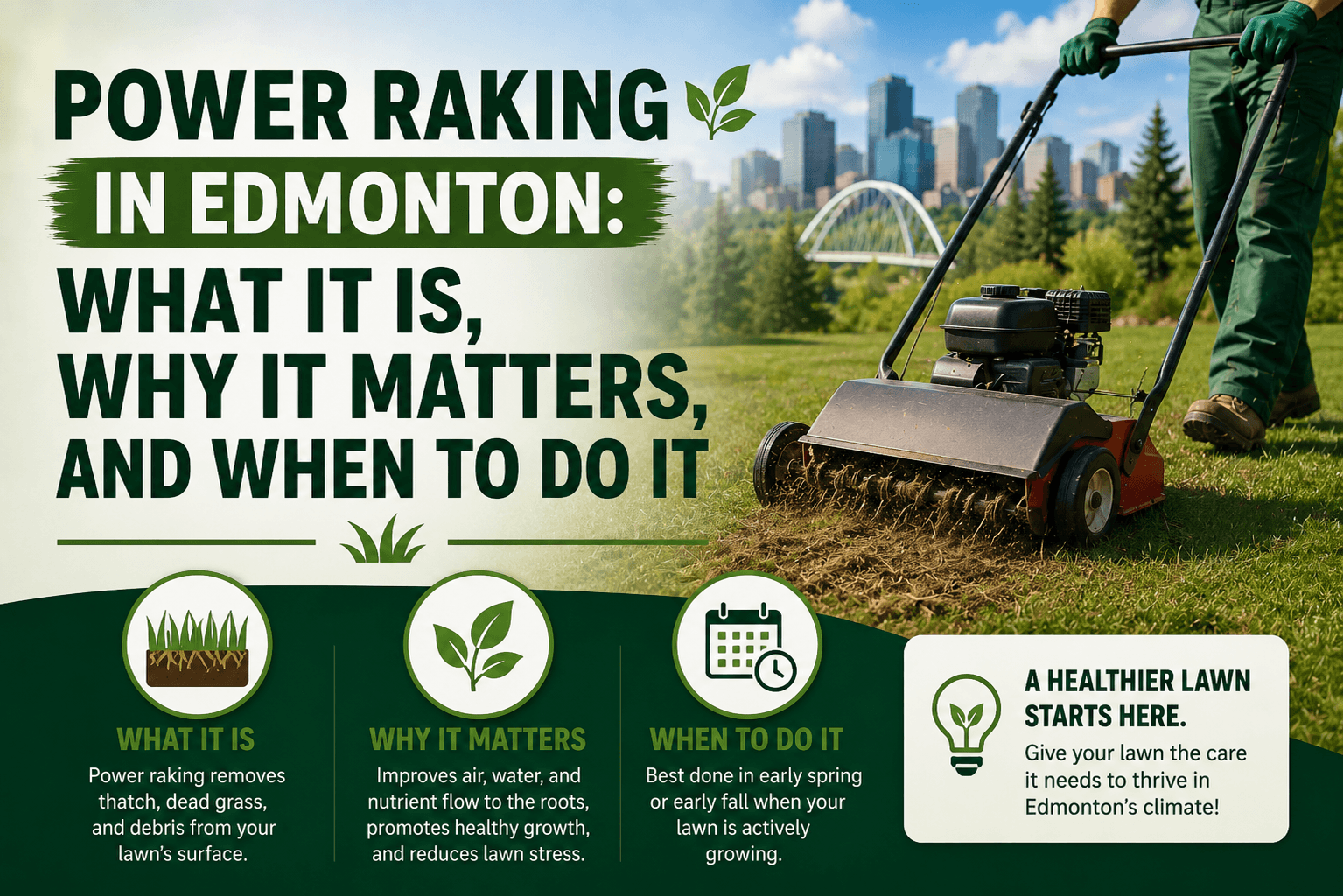
Power raking — also called dethatching — is the mechanical removal of the thatch layer from a lawn using a specialized machine equipped with rotating tines or blades. Unlike hand raking, which only scratches the surface and moves thatch around without truly removing it, a power rake drives into the lawn and aggressively strips out the thatch layer, pulling it up to the surface where it can be collected and removed.
The machine works by spinning metal tines at high speed just below the surface of the grass, tearing through the thatch and breaking it loose from the soil. The result is a significant amount of debris — often surprising to homeowners who do not realize how much has accumulated — that gets raked up and hauled away, leaving a clean, open surface where the grass can breathe and grow freely.
After power raking, a lawn often looks worse before it looks better. The aggressive process leaves the turf looking rough and exposed for a few days. But within one to two weeks — especially when followed by aeration and fertilization — the improvement is dramatic. The grass pushes up new growth quickly because it finally has the light, air, and nutrient access it was missing.
What Is Thatch and Why Does It Build Up in Edmonton?
Thatch is the layer of dead and decaying organic material — primarily dead grass stems, roots, and runners — that accumulates between the soil surface and the green grass blades above. It is a natural byproduct of the grass growth cycle. As old grass blades die and new ones grow, the dead material does not disappear immediately. It settles at the base of the lawn and slowly decomposes.
In a healthy, balanced lawn, this decomposition happens at roughly the same rate as the thatch accumulates, keeping the layer thin and manageable — typically less than half an inch. When the rate of accumulation outpaces decomposition, the thatch layer grows thicker and begins causing problems.
Edmonton’s climate accelerates thatch accumulation for two key reasons. First, the cold temperatures through fall and winter significantly slow down the microbial activity that drives natural decomposition. Microbes that break down organic material are largely inactive below about five degrees Celsius, which means that for six or more months of the year in Edmonton, thatch is accumulating with almost no decomposition taking place to offset it. Second, Edmonton’s heavy clay soil limits the earthworm activity and microbial diversity that help manage thatch in warmer, loamier soils. The result is that Edmonton lawns build up thatch faster and break it down more slowly than lawns in milder climates — making annual power raking a necessity rather than an optional treatment.
Why Thatch Is Damaging Your Edmonton Lawn
A thin thatch layer — under half an inch — is actually beneficial. It provides a small amount of insulation for the soil, helps retain moisture, and cushions the lawn against foot traffic. The problems begin when the layer exceeds half an inch, and for many untreated Edmonton lawns by late spring, the thatch can be an inch or more thick.
Blocked Water and Nutrient Absorption
Thick thatch acts like a sponge on top of the soil — it absorbs water and holds it at the surface rather than allowing it to penetrate down to the root zone. The same blockage applies to fertilizer. When you apply fertilizer to a lawn with a thick thatch layer, much of the product is absorbed by the thatch rather than reaching the soil and the roots beneath. This is one of the primary reasons Edmonton homeowners find that fertilizing their lawn produces disappointing results — the treatment is being intercepted before it gets where it needs to go.
Restricted Oxygen and Root Development
Grass roots need oxygen to grow deep and strong. A thick thatch layer limits the air circulation at the soil surface, reducing the oxygen available to the root zone. Roots in an oxygen-restricted environment stay shallow and weak, making the lawn more vulnerable to drought stress in summer, more susceptible to winter kill, and less able to compete against weeds.
Disease and Pest Habitat
The dark, moist environment inside a thick thatch layer creates ideal conditions for lawn fungal diseases, including the snow mold that is common in Edmonton after cold winters. It also provides shelter for lawn-damaging insects and pests. Removing the thatch layer eliminates these habitats and significantly reduces the conditions that allow disease and pest problems to develop.
When Is the Right Time to Power Rake in Edmonton?
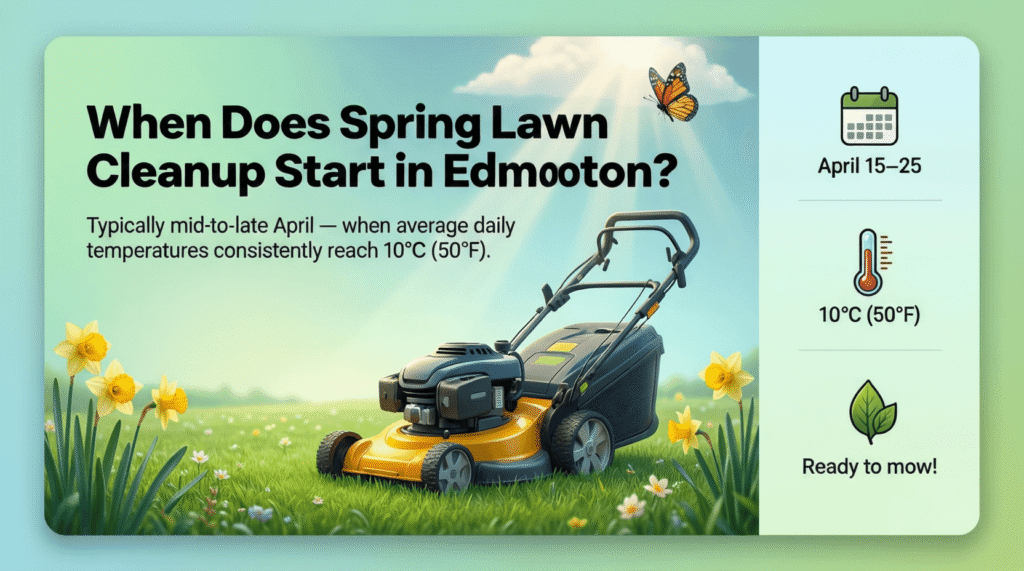
Timing is important for power raking, and Edmonton’s climate creates a specific optimal window that homeowners should aim for each year. Power raking should happen in spring, after the soil has fully thawed and the ground is firm enough to work without compacting — typically late April to early May in Edmonton.
It should not happen too early, when the soil is still soft and saturated from snowmelt. Driving equipment over waterlogged ground compacts the clay soil that the aeration treatment following power raking is designed to relieve. And it should not happen too late in the season, when the grass is already in full active growth and the stress of the aggressive process is harder for the lawn to recover from quickly.
The ideal sequence for Edmonton lawns is spring cleanup first — removing surface debris — followed immediately by power raking, then deep core aeration within a few days, and then fertilization and weed control. This sequence ensures each treatment prepares the lawn for the next one and the combined result is significantly stronger than any single treatment done in isolation.
Power Raking vs. Hand Raking: What Is the Difference?
Many homeowners wonder whether vigorous hand raking in spring accomplishes the same thing as professional power raking. The honest answer is no — not even close. Hand raking removes surface debris and loose dead grass, but it does not reach the compacted thatch layer that sits below the base of the grass blades. To remove thatch effectively, you need the mechanical force and depth of penetration that only a power rake machine provides.
A professional power rake treats the entire lawn surface systematically, penetrating to the correct depth across every section of the property. Hand raking is inconsistent, surface-level, and physically exhausting on a large lawn — and it simply cannot replicate the depth of thatch removal that makes power raking such an effective treatment. For Edmonton lawns where thatch accumulates heavily each winter, the difference in results between hand raking and professional power raking is visible within weeks.
Signs Your Edmonton Lawn Needs Power Raking This Spring
The most obvious sign is a lawn that feels spongy or bouncy underfoot in spring — that cushioned feeling is the thatch layer absorbing your footsteps rather than the soil beneath. A lawn that looks matted and flat after the snow melts, with grass blades pressed down and not standing upright, is another strong indicator. If sections of the lawn stay brown and dormant-looking well into May while other areas green up, the thatch layer may be preventing those sections from accessing the light and warmth they need to wake up.
You can also do a simple physical check. Part the grass blades at the base and look at the layer just above the soil surface. If there is a dense, tan-coloured, fibrous mat more than half an inch thick, power raking is overdue. If you cannot see the soil at all through this layer, the thatch has likely been accumulating for more than one season and the treatment is a priority.
FAQs
How often does an Edmonton lawn need to be power raked?
Most Edmonton lawns benefit from annual power raking every spring. Because Edmonton’s cold winters slow decomposition and thatch accumulates faster than it breaks down, a single season without power raking is usually enough for the thatch layer to reach a problematic thickness. Some lawns with less organic material or faster decomposition may be able to go every two years, but for the majority of Edmonton properties, annual treatment delivers the best results.
Will power raking damage my lawn?
Power raking is an aggressive process and it will make the lawn look rough and patchy for a few days after treatment. This is normal and expected. The tines remove not only thatch but also some weak or dead grass blades in the process. Within one to two weeks — especially when followed by aeration and fertilization — the lawn rebounds and looks noticeably better than it did before treatment. The temporary rough appearance is a sign the process is working, not a sign of damage.
Should power raking come before or after aeration?
Power raking should always come before aeration. Removing the thatch layer first allows the aerator to penetrate the soil more effectively and gives fertilizer and overseeding treatments a clean, direct path to the soil surface. Aerating through a thick thatch layer reduces the effectiveness of the aeration treatment significantly.
Professional Power Raking in Edmonton — Book with Seasons 360
Power raking is one of those treatments where professional equipment and experience make a real and measurable difference. Seasons 360 uses commercial-grade power raking equipment that covers Edmonton properties efficiently, penetrates to the right depth, and removes thatch thoroughly without over-stressing the lawn. We have power raked lawns across Edmonton for years and understand exactly how aggressively Edmonton’s climate builds up thatch and exactly what it takes to clear it properly.
Our spring power raking service is part of a complete seasonal treatment sequence — spring cleanup, power raking, deep core aeration, fertilization, and weed control — designed to deliver the best possible results for Edmonton lawns from the very start of the growing season.
Contact Seasons 360 today for a free quote on power raking in Edmonton. Spring booking slots fill up quickly every year — reach out now to secure your spot and give your lawn the fresh start it needs.